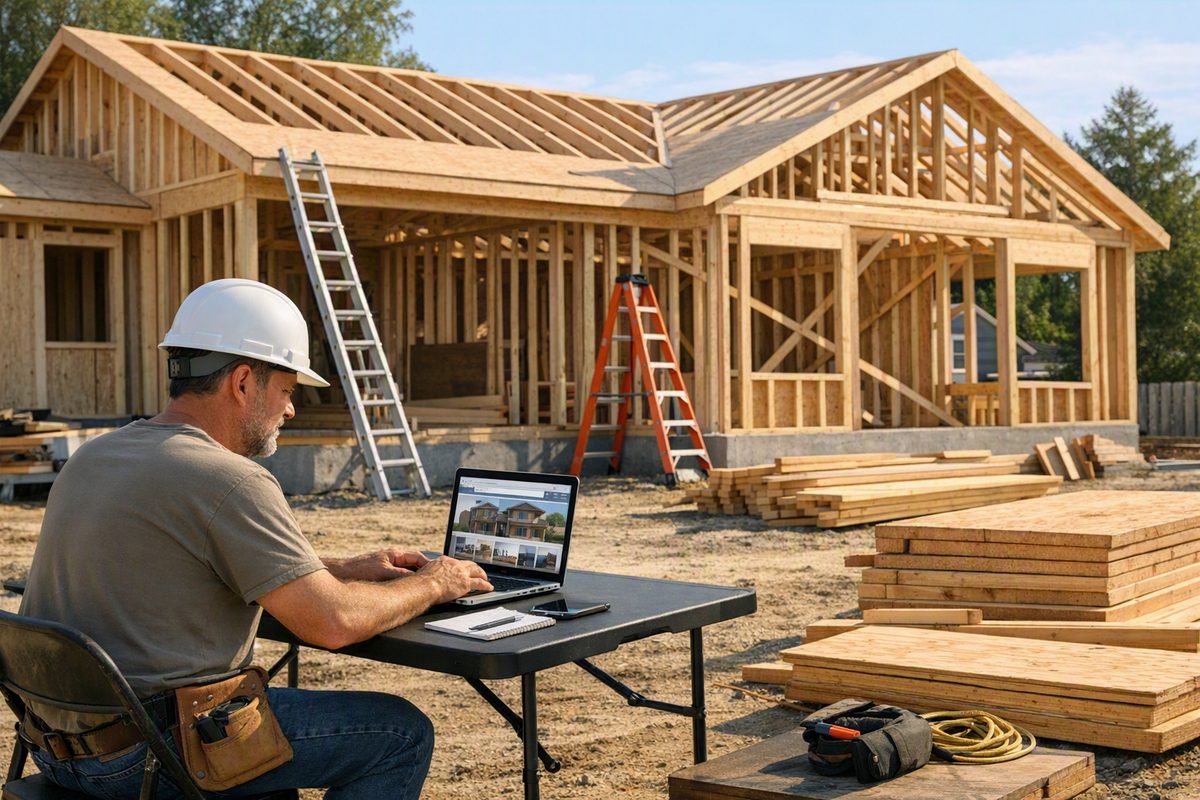
Graphic Design for Construction Companies
Home Graphic Design
What is graphic design for construction companies?
Graphic design for construction companies is the use of visuals like logos, brochures, signage, and digital assets to clearly communicate services, experience, and professionalism. It helps contractors stand out, build trust with decision makers, and support lead generation through consistent, structured, and easy to understand visual messaging. For contractors evaluating providers, understanding what graphic design for construction industry professionals actually involves is the first step toward stronger branding and better results.
Why Graphic Design for Construction Companies Matters for Visibility and Leads
Graphic design for construction companies plays a critical role as more buyers search online to evaluate contractors, compare services, and make decisions quickly. Without clear, professional visuals, contractors risk losing business to competitors who present their capabilities more effectively. Poor design can create confusion, reduce trust, and limit engagement. This page explains how construction branding services and visual marketing for contractors improve communication, build credibility with decision makers, and support lead generation by making services, experience, and qualifications easy to understand.

How Graphic Design for Construction Companies Drives Leads, Calls, and Revenue
Graphic design for construction companies drives measurable business outcomes by making services, experience, and capabilities immediately clear to buyers evaluating multiple contractors. When visuals are structured around how decision makers compare options, they reduce hesitation and move prospects toward action faster.
Clear, well-organized visuals directly increase leads by helping potential clients quickly understand what a contractor offers and whether they are qualified. Effective construction brand identity design prevents businesses from losing attention due to cluttered or inconsistent materials and helps keep users engaged long enough to generate form submissions and inquiries. Strong visual hierarchy, consistent branding, and easy to scan layouts are essential parts of construction brand identity design, guiding users through key information and pushing them toward contacting the company.
Calls increase when design removes friction from the decision making process. When buyers can instantly identify services, service areas, and proof of experience, they are more likely to pick up the phone. Clear calls to action, paired with professional presentation, build confidence and encourage immediate outreach rather than continued searching.
Revenue growth follows as a result of better qualified leads and improved close rates. When visuals clearly communicate project types, capabilities, and past work, prospects come in with higher intent and stronger understanding. This reduces time spent educating unqualified leads and increases the likelihood of winning bids and securing higher value projects.
Visibility also improves as consistent, high quality graphic design for construction company branding increases engagement across digital platforms. Users stay on pages longer, interact more with content, and are more likely to return. This strengthens overall online performance and positions contractors as more credible and established within their market.
Effective graphic design for construction companies supports:
- More qualified leads and project inquiries
- Increased phone calls and faster buyer action
- Higher close rates on bids and proposals
- Greater visibility across search and digital channels
Graphic design for construction companies is important because it creates a strong first impression and builds credibility with potential clients. Clear, professional visuals help buyers quickly understand services and capabilities, making it easier to trust the contractor and move forward with contacting, requesting quotes, or awarding projects.Why is graphic design important for contractors?
Why Graphic Design for Construction Companies Is Critical for Competing and Winning Work
Graphic design for construction companies is critical because it directly impacts whether buyers trust your business and choose to contact you. Without clear, professional visuals, contractors lose opportunities to competitors who present their services more effectively.
When design is weak or inconsistent, potential clients struggle to quickly understand what you do, what types of projects you handle, and whether you are qualified. This leads to lost leads, fewer calls, and missed opportunities during the early stages of the buying process. Buyers comparing multiple contractors will move on quickly if your materials create confusion or lack credibility, giving competitors an immediate advantage.
In the short term, this results in fewer inquiries, lower engagement, and reduced visibility across digital channels. Prospects who do land on your website or view your materials are less likely to take action if the presentation does not build confidence. Even if your company has strong experience, poor visual communication and weak contractor logo design services prevent that value from being recognized. Without professional logo design for construction companies, businesses often face underperformance in both marketing and sales efforts.
Over time, the impact compounds. As competitors continue improving how they present their services, they gain more visibility, stronger brand recognition, and a larger share of qualified leads. This creates a cycle where they receive more opportunities, win more projects, and reinvest into better marketing and positioning, further widening the gap.
Meanwhile, contractors without effective graphic design for construction industry standards fall behind. Missed leads turn into missed revenue, and inconsistent branding weakens long term credibility in the market. Businesses may rely more heavily on referrals or lower value jobs, limiting growth and making revenue less predictable. The inability to clearly communicate capabilities also makes it harder to compete for larger or higher margin projects.
Graphic design is not just about appearance. It determines how quickly and confidently buyers can evaluate your business. Without it, contractors lose both immediate opportunities and long term market position, while competitors who invest in clear, structured visuals continue to gain traction and dominate decision making.
What does graphic design include for construction companies?
Graphic design for construction companies includes logos, business cards, brochures, vehicle wraps, signage, and digital assets like website graphics and ads. These materials work together to create consistent branding that reinforces recognition, improves communication, and helps contractors present their services clearly across all platforms. A strong logo design for construction companies ties every one of these materials together under a single, recognizable identity, and dependable contractor logo design services make sure that identity stays consistent as the business grows.
How does graphic design generate leads for construction companies?
Graphic design for construction companies generates leads by making services, experience, and capabilities easy to understand. Clear layouts, strong calls-to-action, and consistent visuals guide users toward taking action, increasing phone calls, form submissions, and quote requests from prospects actively evaluating contractors.
What makes effective construction graphic design?
Graphic design for construction companies is most effective when it focuses on clarity, consistency, and professionalism. It should highlight key services, showcase real project work, and present credentials in a structured way that helps buyers quickly evaluate the contractor and confidently move forward in the decision making process.
Graphic Design Case Studies for Construction Companies
Graphic Design Case Study for D2B Homes– Crossville, Tennessee
This project highlights how MFG Builders supported the visual presentation of a custom home builder in Crossville, Tennessee through graphic design that complements a structured website experience. The design work focused on presenting custom home design, wood frame house plans, steel frame house plans, and log home plans in a cleaner, more professional way so prospective homeowners can quickly understand the company’s building options and move through the website with greater confidence.
Graphic Design Case Study for Advance Equipment – Chicago, Illinois
This project highlights how MFG Builders improved the visual communication of a construction tool manufacturer in Chicago, Illinois through graphic design that helps organize a broad product catalog. The design work supported clearer presentation of American made drywall tools, painting tools, wall covering tools, paste machines, and related accessories so contractors and buyers can more easily navigate product categories and understand the company’s capabilities across multiple construction trades.
Graphic Design Case Study for McDaniel & West – Cookeville, Tennessee
This project highlights how MFG Builders strengthened the visual presentation of a painting contractor in Cookeville, Tennessee through graphic design aligned with the company’s service mix and market focus. The design work helped present residential painting, commercial painting, industrial coatings, and disaster restoration services in a more polished and professional format so homeowners, businesses, and industrial prospects can better understand the company’s scope and credibility at a glance. Across all three projects, the results show what graphic design for construction industry businesses can expect when visuals are built around how buyers actually make decisions.
Construction Graphic Design Statistics
- In a construction industry survey, 70% of respondents said social media produced greater brand awareness for their company.
- 46.1% of people in Stanford’s study judged a website’s credibility in part by its overall visual design — including layout, typography, font size, and color scheme.
These trends highlight the importance of clear, mobile-friendly visuals that communicate quickly.
How to Choose the Right Graphic Design Provider for Construction Companies
Choosing the right provider of graphic design for construction companies comes down to finding a partner who can consistently generate leads, calls, and measurable ROI, not just create visually appealing materials.
When evaluating providers, experience in the construction industry should be a top priority. A qualified team understands how contractors are evaluated and knows how to present services, project experience, and capabilities in a way that drives inquiries. Their process should be structured and repeatable, focusing on aligning visuals with buyer intent, service offerings, and conversion goals. Most importantly, they should be able to show real results, such as increased engagement, higher quality leads, and improved close rates.
Many providers get this wrong by applying generic design or marketing strategies that do not translate to construction. They often focus on trends or aesthetics instead of clarity and accuracy, which are critical for contractor credibility. Similar to how generic approaches fail in SEO for construction, graphic design for construction industry work without industry understanding can lead to missed opportunities and poor performance. Without construction specific knowledge, visuals may look polished but fail to communicate what actually matters to decision makers.
What truly matters is whether the design supports business outcomes. Effective graphic design should make it easier for prospects to understand services, trust the company, and take the next step. This directly impacts the number of calls, form submissions, and project inquiries a contractor receives. It should also integrate seamlessly with other efforts, such as PPC for construction companies, ensuring consistency from first impression to conversion.
At the end of the day, the right provider is one that treats graphic design as a performance tool, focused on visibility, lead generation, and revenue growth, not just appearance. This is especially true for logo design for construction companies, where a single identity has to work across trucks, uniforms, signage, and every digital touchpoint at once.
Why MFG Builders Has Authority in Construction Graphic Design
MFG Builders was built specifically for the construction industry, backed by more than 20 years of direct, hands on experience working inside construction companies. This includes real involvement in estimating, project documentation, subcontractor coordination, and business development, not just marketing from the outside.
The team has worked with individuals and organizations connected to leading construction companies such as Turner Construction and Kinsley Construction, providing direct exposure to how projects are evaluated, awarded, and managed at a high level.
MFG Builders has supported more than 100 construction companies across the United States, including general contractors, commercial builders, civil contractors, and specialty trades. These are companies competing for real projects where clarity, credibility, and presentation directly impact who gets hired.
This experience fundamentally changes how graphic design for construction company clients is approached. It is not treated as branding or aesthetics, it is built as a communication tool that aligns with how construction buyers actually evaluate companies. Services are structured clearly. Project experience is highlighted correctly. Capabilities are presented in a way that reduces confusion and builds trust immediately.
The team behind MFG Builders has also been featured in national media, including appearances connected to Fox Business, discussing industry trends and business growth. This level of exposure reflects a deeper understanding of how companies must position themselves to compete in evolving markets.
Because of this foundation, MFG Builders does not rely on generic design trends or surface level visuals. Every graphic is built with real construction context, ensuring that contractors are presented in a way that matches how owners, developers, and project managers actually make decisions.
Questions About Graphic Design for Construction Companies
Why is graphic design important for construction companies?
Graphic design helps contractors communicate services, experience, and credibility clearly. Strong visuals influence how quickly buyers trust your business and decide to move forward.
What should construction graphic design include?
It should include clear service descriptions, project visuals, certifications, and consistent branding. These elements help buyers understand capabilities and evaluate qualifications.
How does graphic design impact lead generation?
Well-structured visuals make it easier for buyers to understand services and take action. This improves calls, form submissions, and project inquiries.
Do contractors need professional branding?
Yes, professional branding ensures consistency across all materials and reinforces credibility. It helps contractors stand out in competitive markets.
How long does it take to see results from design improvements?
Most construction companies begin seeing improvements in 90 to 120 days as visuals become consistent and aligned with buyer expectations.
Can graphic design improve website performance?
Yes, strong visuals improve user experience and support conversions when paired with Construction Website Design and optimization strategies.
Graphic Design for Construction Companies That Drives Results
Graphic design for construction companies plays a direct role in generating leads, supporting business growth, and increasing visibility in a competitive market. When visuals clearly communicate services, experience, and capabilities, they help contractors attract the right audience and turn interest into action. Strong, consistent graphic design for construction industry brands keeps businesses top of mind, improves engagement, and creates more opportunities for calls and project inquiries. Over time, this leads to a more predictable flow of work and stronger positioning against competitors.
Start Improving Your Construction Visual Strategy
If your design is not helping generate inquiries, it is likely working against you. Clear, structured visuals make it easier for buyers to understand your services and trust your capabilities.
Schedule a consultation to review your current design and identify opportunities to improve clarity, consistency, and lead generation.
Latest Industry News
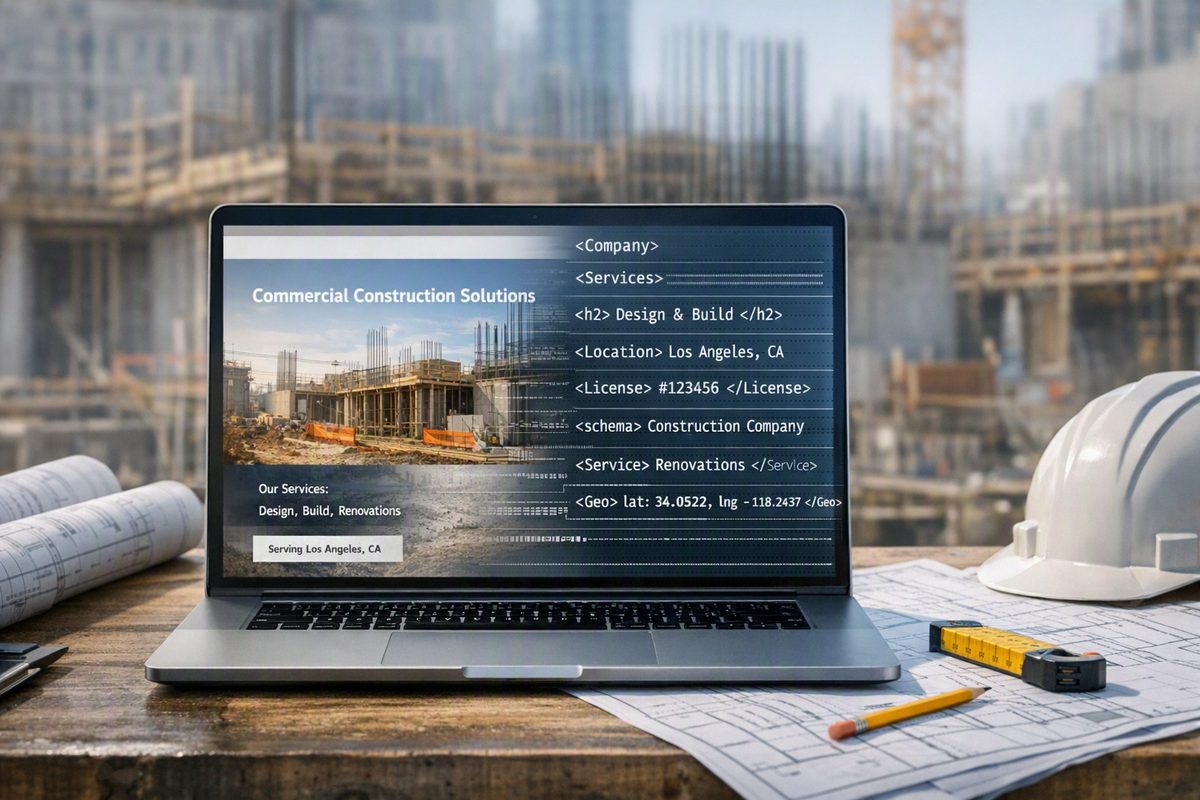
What an AI Engine Reads on a Contractor Website
SEO Versus AEO for Construction Companies