
Prefabrication and modular construction are experiencing a transformation from niche specialty to mainstream methodology. The global modular construction market reached $104 billion in 2024 and is projected to grow at a compound annual growth rate of 6-8% through 2030, driven by labor shortages, schedule demands, and cost pressures that traditional stick-built methods cannot meet. Construction markets from Boston to San Diego are reporting unprecedented adoption of offsite construction techniques.
Contractors who once dismissed prefabrication as suitable only for temporary buildings now embrace it for permanent structures including multifamily housing, hospitals, schools, and commercial offices. This shift reflects not just changing preferences but practical necessity in an industry facing challenges that traditional construction cannot address. The technology has matured, the workforce has adapted, and owner acceptance has reached critical mass.
Labor Shortages Accelerate Offsite Construction Adoption
Construction labor shortages make prefabrication and modular construction increasingly attractive. Offsite manufacturing facilities operate year-round in controlled environments, attracting workers who might reject traditional construction. A manufacturing facility offers consistent hours, climate control, and predictable schedules. These conditions appeal to workers seeking construction careers without the hardships of outdoor jobsites.
Factory production requires fewer total labor hours than stick-built construction. Industry research suggests that modular construction can reduce project timelines by 30-50% compared to traditional methods, requiring substantially fewer on-site labor hours. This productivity advantage matters critically when contractors cannot find enough workers. Doing more with fewer people becomes possible through offsite construction methods.
Skilled trades shortages particularly benefit from prefabrication. A factory can employ fewer highly skilled workers who train less experienced workers in a controlled setting. This apprenticeship model works better in factories than on chaotic jobsites. The result is faster skill development and better quality control, addressing two major construction industry challenges simultaneously.
Schedule Compression Drives Prefab Demand
Time-to-market pressures push developers and owners toward modular construction. A multifamily building delivered six months faster generates rental income earlier, dramatically improving project returns. Hotels opening for peak season rather than missing it can recover their entire construction premium in a single year. Schedule becomes the dominant decision factor when time value of money overwhelms construction cost differences.
Weather independence provides schedule certainty that site-built construction cannot match. Factory production continues regardless of rain, snow, heat, or cold. Site preparation and foundation work still face weather constraints, but the major building volume proceeds unaffected by climate. This weather immunity reduces schedule risk substantially.
Concurrent site and factory work compresses schedules dramatically. While site contractors prepare foundations, factory workers build modules. When site work completes, modules ship and installation begins immediately. Traditional construction sequences these activities, while modular construction overlaps them. The time savings can reduce a 24-month project to 16 months, transforming project economics.
Quality Control Improves in Factory Settings
Manufacturing environments enable quality control impossible on traditional jobsites. Factories perform inspections at multiple production stages under optimal lighting and comfortable conditions. Dimensions can be verified precisely using jigs and fixtures. This systematic quality control reduces defects and callbacks that plague site-built construction.
Building code inspections occur in factories rather than on sites. Inspectors visit facilities regularly and develop familiarity with production processes. This relationship enables more thorough inspections than site inspectors conducting one-time visits can achieve. The result is higher confidence in code compliance and fewer construction defects.
Material waste drops significantly in factory production. Optimized cutting processes and material reuse minimize scrap. A site-built project might waste 10-15% of materials, while factory production typically wastes significantly less. This efficiency reduces costs and environmental impact simultaneously, appealing to sustainability-focused owners.
Cost Competitiveness Reaches Tipping Point
Prefabrication and modular construction costs have declined relative to site-built construction. Factory automation, improved designs, and production volume increases have driven manufacturing costs down. Simultaneously, site-built construction costs have risen due to labor shortages and material volatility. These opposing trends have eliminated the cost premium that once limited modular adoption.
Some building types now compete favorably using modular construction compared to traditional methods. Multifamily housing with repetitive units achieves excellent economies of scale. Hotels with identical room layouts maximize factory efficiency. Healthcare facilities with standardized patient rooms benefit from modular approaches. These building types represent massive market segments where modular construction competes on cost alone. [ARTICLE NOT YET PUBLISHED – LINK TO: “Material Cost Volatility Forcing Construction Companies to Rethink Project Bidding” ONCE LIVE]
Total project costs including financing often favor modular construction even when direct construction costs are equal. The compressed schedules reduce financing costs, insurance expenses, and overhead. A project completed six months faster saves six months of construction loan interest. These soft cost savings can exceed any construction cost premium, making modular construction the economical choice.
Design Standardization Enables Mass Customization
Modular construction has evolved from cookie-cutter designs to mass customization. Manufacturers offer extensive options within standardized platforms. An apartment building might use standard room modules but customize finishes, layouts, and amenity spaces. This approach provides design flexibility within efficient manufacturing processes.
Architectural firms increasingly design specifically for modular construction. Rather than treating prefabrication as a value engineering alternative, designers create purpose-built modular designs. This design-for-manufacturing approach optimizes both aesthetics and production efficiency. The result is buildings that look indistinguishable from site-built construction but capture modular benefits.
Digital design tools integrate with factory production systems. Building Information Modeling (BIM) files transfer directly to manufacturing equipment. This digital continuity eliminates translation errors and enables rapid design customization. Owners can make finish selections late in the design process without delaying production, providing flexibility that traditional construction cannot match.
Transportation and Logistics Create Geographic Constraints
Transportation costs and logistics limit modular construction’s geographic reach. Shipping completed modules hundreds of miles adds costs that can eliminate modular advantages. Most modular projects stay within 300-500 miles of manufacturing facilities. This radius constraint means factory locations significantly affect market access.
Manufacturers are establishing regional facilities to expand geographic coverage. Rather than one large factory serving the entire country, successful modular companies operate multiple regional plants. This distributed manufacturing approach reduces shipping costs and enables better service to local markets. The investment required limits growth to well-capitalized firms.
Oversize load regulations complicate module transportation. Highway restrictions on width, height, and weight constrain module dimensions. Routing around low bridges, narrow roads, and weight-limited bridges requires careful planning. Some projects become impractical due to transportation constraints despite otherwise being ideal for modular construction.
Site Conditions and Foundation Challenges
Modular construction requires precise foundation work that traditional construction tolerates more easily. Modules must fit together perfectly, demanding foundation accuracy to within small tolerances. Any foundation errors can prevent proper module installation, causing costly delays and corrections. This precision requirement increases foundation costs and requires experienced contractors.
Difficult site conditions can negate modular advantages. Urban infill sites with limited laydown space and crane access may not accommodate module delivery and installation. Projects on steep slopes or with subsurface complications might spend foundation savings on site preparation. Each project requires evaluation of whether site conditions suit modular construction.
Existing building renovations present challenges for modular construction. While modules work well for additions or rooftop expansions, integrating them into existing structures requires careful planning. Structural connections, utilities coordination, and access constraints complicate projects that would be straightforward for new construction. Modular construction excels at new buildings but faces limitations in renovation work.
Financing and Appraisal Barriers Slowly Diminish
Traditional construction financing structures don’t fit modular construction timelines. Construction loans typically release funds as work progresses, verified by site inspections. When most construction occurs in a factory hundreds of miles away, local inspectors cannot verify progress. Lenders struggle to adapt financing draws to offsite construction realities.
Some lenders have developed modular-specific financing products. These loans include factory inspections and manufacturer certifications instead of traditional site-based draws. Specialized modular lenders understand the process and structure appropriate financing. However, many local and regional banks lack this expertise, limiting financing availability in some markets.
Appraisers face challenges valuing modular buildings without extensive comparable sales. Traditional appraisal methods rely on recent sales of similar buildings. When modular construction represents a growing but still limited market share, finding true comparables becomes difficult. Appraisers may undervalue modular buildings, affecting refinancing and property sales even when construction quality equals or exceeds site-built alternatives. [ARTICLE NOT YET PUBLISHED – LINK TO: “Construction Labor Crisis 2025: Why 80% of Contractors Can’t Find Skilled Workers” ONCE LIVE]
Building Codes and Approval Processes Adapt
Building codes increasingly accommodate prefabrication and modular construction. Model codes now include specific provisions for factory-built construction. This code development provides clearer standards and reduces approval uncertainty. Jurisdictions adopting current codes face fewer obstacles to modular construction approval.
Some states have established statewide approval processes for modular buildings. Manufacturers obtain state certifications that local jurisdictions must accept. This centralized approval eliminates redundant local reviews and speeds project approvals. States with streamlined processes see higher modular adoption rates than those requiring local-by-local approvals.
Fire resistance and structural performance standards for modular buildings now match site-built requirements. Early concerns about modular construction safety have been addressed through testing and certification. Buildings must meet the same life safety standards regardless of construction method. This regulatory equivalence removes a significant adoption barrier.
Skilled Trades Training Shifts to Factory Focus
Workforce development programs increasingly incorporate prefabrication training. Trade schools and apprenticeship programs teach factory production methods alongside traditional field skills. This training evolution reflects market demand for workers comfortable with offsite construction techniques. Graduates with factory experience find ready employment in growing modular manufacturing sectors.
Factory work appeals to younger workers in ways traditional construction does not. Climate-controlled environments, regular schedules, and technology integration align with younger generations’ expectations. Manufacturing facilities can attract workers who would never consider outdoor construction work. This workforce access helps modular manufacturers overcome the labor shortages plaguing traditional contractors.
Cross-training between trades occurs more naturally in factory settings. An electrician in a factory works alongside plumbers, HVAC technicians, and finish carpenters. This proximity enables skill sharing and process understanding that siloed site-built trades rarely achieve. The result is a more versatile workforce capable of solving problems across traditional trade boundaries.
Sustainability Benefits Attract ESG-Focused Owners
Environmental, social, and governance (ESG) considerations increasingly influence construction decisions. Modular construction offers sustainability advantages that appeal to ESG-focused owners and investors. Reduced material waste, lower transportation emissions for materials, and better indoor air quality during construction all contribute to improved environmental performance.
Factory production enables better material recycling and waste management. Scrap materials can be sorted and recycled systematically rather than ending up in dumpsters. Manufacturing facilities often achieve waste reduction goals impossible on construction sites. These measurable environmental benefits help owners meet sustainability commitments and achieve green building certifications.
Energy efficiency in factory production often exceeds site-built construction. Controlled environments enable precise insulation installation and air sealing. Quality control ensures systems perform as designed. The result is buildings that meet or exceed energy code requirements more consistently than typical site-built construction.
Industry Resources and Technical Standards
The Modular Building Institute provides industry research, technical resources, and professional development for companies involved in offsite construction. This nonprofit organization tracks market data, advocates for favorable regulations, and connects manufacturers, contractors, and designers working in the modular construction sector.
ICC Evaluation Service offers evaluation reports and certifications for building products and systems, including modular construction components. These third-party evaluations help manufacturers and contractors demonstrate code compliance and quality standards to building officials and owners.
How MFG Builders Supports Construction Companies
The rise of prefabrication and modular construction creates opportunities for forward-thinking contractors to differentiate themselves in the market. Companies embracing these methods need to educate potential clients about the benefits and address persistent misconceptions about factory-built construction.
MFG Builders specializes in web development and digital marketing specifically for construction companies adopting innovative methods like prefabrication and modular construction. From websites showcasing your modular projects to content marketing explaining the advantages of offsite construction, MFG Builders helps contractors position themselves as industry innovators. In a market where client education about construction methods is critical, having a professional digital presence that communicates your expertise separates industry leaders from traditional contractors. Contact MFG Builders today to discuss how strategic digital marketing can help your construction business capitalize on the growing demand for prefabrication and modular construction.
Works Cited
ICC Evaluation Service. “ICC Evaluation Service.” International Code Council, www.icc-es.org/. Accessed 13 Oct. 2025.
Modular Building Institute. “Modular Building Institute.” Modular Building Institute, www.modular.org/. Accessed 13 Oct. 2025.
Keep reading

Industry News
Material Cost Volatility Forcing Construction Companies to Rethink Project Bidding
The construction industry is navigating unprecedented material cost volatility that has fundamentally changed how companies approach project bidding and client relationships. Price…

Industry News
Construction Labor Crisis 2025: Why 80% of Contractors Can’t Find Skilled Workers
The construction industry faces its most severe workforce challenge in decades. From residential builders in Phoenix to commercial contractors in Charlotte, the…
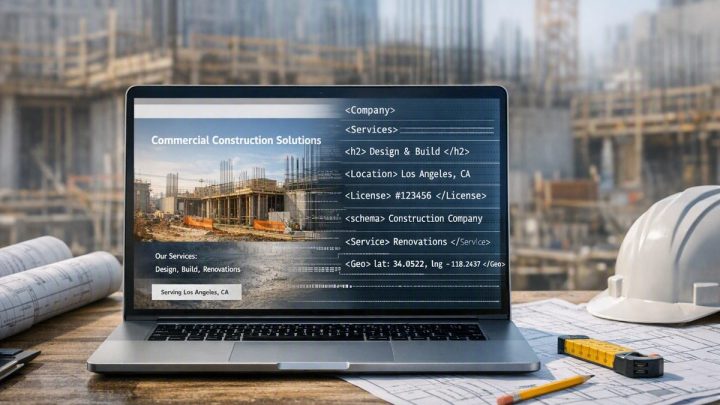
AI-Powered Search Engine
What an AI Engine Reads on a Contractor Website
Open a contractor website, turn the images off, and read what is left. That is close to what a machine gets. On…